Reviewing the Happy Fourth of July SVG for Real Embroidery Projects
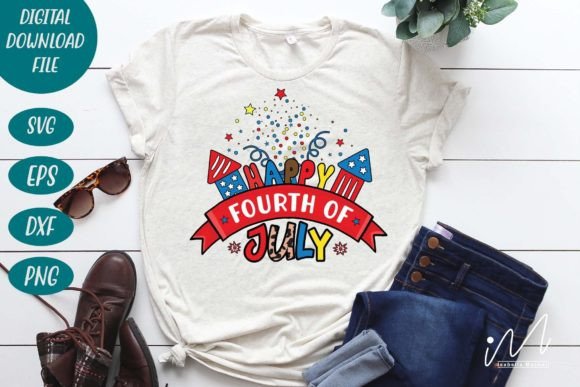
As an embroidery designer who spends more time staring at stitch simulations than I do sleeping, I have learned that not every digital file translates well to thread. We live in an era where design assets are abundant, but finding a graphic that holds up under the needle requires a critical eye. Recently, I evaluated the Happy Fourth of July Svg, 4th July Svg to determine its viability for actual production work. This is not just about whether the lines look clean on a screen; it is about how this Graphics product performs when transformed into a tangible handmade product.
The initial impression of this design is one of festive clarity. The layout suggests a bold, celebratory mood, which is exactly what clients look for during the summer holiday season. When I loaded the SVG into my digitizing software to inspect the paths, I noticed the shapes were well-defined. For those of us working in Crafts, this is the first hurdle. If the vectors are messy, the digitizing process becomes a nightmare of node editing. Fortunately, this file appeared ready for conversion, allowing me to focus on how the design would behave as a machine embroidery design rather than fixing broken geometry.
From Screen to Stitch: A Real-World Application
To truly test the Happy Fourth of July Svg, 4th July Svg, I imagined a specific client request: a custom tote bag design for a local boutique hosting a summer sale. The client wanted something eye-catching but durable. This scenario is common for any Etsy seller or small shop product creator. The design needed to be large enough to make a statement but simple enough to stitch out quickly without consuming excessive thread or machine time.
I visualized placing this graphic on a heavy canvas tote. The bold lines of the SVG would translate well into satin stitches or dense fill stitches, depending on the size. However, because this is a quote-based design, the typography is key. In embroidery, tiny serifs or thin lines can easily get lost or cause thread breaks. My assessment focused on whether the lettering in the 4th July Svg was robust enough for a finished product that might be washed repeatedly. If the text is too delicate, it risks looking messy after the first cycle in the laundry, which damages brand consistency and customer trust.
Versatility Across Different Garments and Items
Beyond tote bags, this design has potential across various custom apparel items. Consider sweatshirt embroidery. The thick fabric of a hoodie provides a stable base for larger designs. Here, the Happy Fourth of July Svg, 4th July Svg could serve as a central chest piece. The contrast of bright red, white, and blue threads against a navy or heather gray sweatshirt creates a classic, patriotic aesthetic that sells well year after year.
However, caution is required when moving to smaller or more difficult surfaces. For baby embroidery, such as a onesie or a burp cloth, the scale must be reduced significantly. This is where the simplicity of the SVG becomes an asset. Complex details often turn into a tangled mess at small sizes. If this design maintains its legibility when scaled down to a 4x4 hoop, it becomes a viable option for personalized gift items. Parents love holiday-themed baby clothes, but they also demand comfort. A design with high stitch density can feel stiff and scratchy against sensitive skin. Therefore, if you use this file for baby items, consider using lighter weight threads or adjusting the density in your digitizing software to ensure softness.
Another popular application is the embroidered patch. Patches require tight, saturated stitching to prevent fraying and to give a professional, raised look. The 4th July Svg could be digitized as a merrowed-edge patch. This transforms a simple digital file into a versatile accessory that can be ironed onto hats, jackets, or bags. For commercial embroidery businesses, offering patches is a great way to increase average order value without committing to full-garment decoration.
Technical Considerations for the Embroiderer
While the visual appeal of the Happy Fourth of July Svg, 4th July Svg is strong, the technical execution determines the quality of the final item. One major factor is fabric texture. On smooth cotton or polyester blends, the design will look crisp. However, on textured fabrics like linen or terry cloth, small details may sink into the weave. In these cases, using a cutaway stabilizer is non-negotiable. It provides the necessary support to keep the stitches floating above the fabric texture rather than disappearing into it.
Color selection is another critical element. The patriotic theme naturally lends itself to red, white, and blue. However, blind adherence to tradition can sometimes result in poor contrast. For example, stitching white thread on a light gray shirt might render the design invisible. I always recommend creating black and white mockups before threading up the machine. This helps verify that the thread colors chosen provide sufficient contrast for the design to be readable from a distance. If the SVG includes intricate elements, ensure that adjacent colors do not blend together visually.
Furthermore, consider the hoop size. While the SVG can be resized infinitely in vector software, embroidery machines have physical limits. If you plan to stitch this on a cap, you are limited by the curved surface and the smaller cap frame. The design must be simplified or scaled down to fit within the usable area of the cap without distorting the text. Curved surfaces also require careful hooping and stabilizing to prevent puckering, which can ruin even the best-digitized design.
Commercial Use and Business Strategy
For craft business owners, understanding the licensing of your digital files is paramount. The product description indicates you receive SVG, DXF, EPS, and PNG formats. This versatility is excellent for hybrid businesses that offer both physical embroidered goods and digital downloads. You could sell the SVG as a cutting file for vinyl crafters while using the same design for your own embroidered inventory. However, always confirm the specific license terms. Some creators allow commercial use for physical products but restrict the resale of the digital file itself. Clarifying this protects your small shop product line from legal issues.
Using this design in your marketing materials can also boost engagement. High-quality printable mockup images featuring the Happy Fourth of July Svg, 4th July Svg on various products can help customers visualize the end result. Show the design on a picnic blanket, a kitchen towel, and a t-shirt. This demonstrates versatility and inspires buyers to purchase for multiple uses. It positions your brand as thoughtful and creative, rather than just a vendor of generic items.
Final Verdict: Is It Worth the Thread?
The Happy Fourth of July Svg, 4th July Svg is a solid addition to a seasonal design library. Its strength lies in its adaptability. It works well for bold statements on large items like totes and sweatshirts, and with careful digitizing, it can succeed on smaller goods like baby clothes and patches. The key to success is not just loading the file and hitting start, but understanding how the design interacts with different fabrics, hoops, and thread types.
Before committing to a large production run, always stitch out a test sample on scrap fabric similar to your final product. Check for thread breaks, registration issues, and overall aesthetic balance. Adjust your tension and stabilizer as needed. By treating this digital asset with the respect it deserves, you can create high-quality holiday embroidery pieces that customers will cherish. Whether you are an experienced apparel decorator or a hobbyist looking to make a special personalized gift, this design offers a reliable foundation for creative expression. Just remember, the magic happens not in the download, but in the thoughtful execution of the stitch.