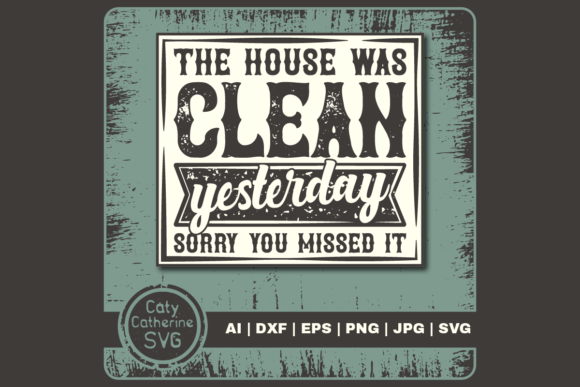
Reviewing House Clean Yesterday Sorry You Missed
As an embroidery designer who has spent years digitizing and stitching thousands of designs, I have developed a keen eye for what works in thread versus what only looks good on a screen. When I first encountered House Clean Yesterday Sorry You Missed, my initial reaction was one of amusement followed immediately by professional curiosity. This piece, categorized under Crafts and Graphics, is not just a funny quote; it is a test of typographic balance and stitch clarity. Designed by Caty Catherine, this SVG cut file promises versatility, but for us in the embroidery world, the real question is always: how does it translate from vector lines to actual thread?
The First Impression: Mood and Visual Personality
The phrase itself carries a distinct personality. It is sassy, relatable, and undeniably modern. For home decor enthusiasts and busy parents, this sentiment resonates deeply. Visually, the design relies heavily on typography. In embroidery, text-based designs are deceptively challenging. Unlike complex illustrations where you can hide minor imperfections in shading or detail, every letterform in House Clean Yesterday Sorry You Missed must be legible and balanced. The layout appears clean, suggesting that the designer prioritized readability, which is crucial when converting this into a machine embroidery design. The mood is lighthearted, making it an ideal candidate for products that aim to bring a smile to the customer’s face.
Real-World Application: A Case Study
To truly evaluate this design, I imagined a specific project scenario. Picture a local boutique owner who specializes in high-quality kitchen linens. She wants to launch a new line of tea towels and aprons that appeal to young homeowners who appreciate humor in their domestic spaces. She chooses House Clean Yesterday Sorry You Missed for a set of flour sack towels. This is a classic use case for this type of embroidery file.
In this context, the design needs to withstand frequent washing while maintaining its charm. If I were stitching this for her, I would likely opt for a simple running stitch or a light satin stitch border to keep the fabric soft and flexible. Heavy fill stitch backgrounds would be inappropriate here, as they would make the towel stiff and uncomfortable to use. The success of this product hinges on the design’s ability to look intentional and crisp without overwhelming the delicate texture of the linen. If executed well, this becomes a best-selling handmade product that customers buy not just for utility, but for the personality it adds to their kitchen.
Performance Across Different Substrates
One of the strengths of a text-based graphic like this is its adaptability. However, each substrate presents unique challenges. Let’s break down how House Clean Yesterday Sorry You Missed performs across common embroidery projects:
- Sweatshirts and Hoodies: This is perhaps the most popular application. The soft, fuzzy texture of fleece requires careful attention to stitch density. If the letters are too thin, they may get lost in the pile. I recommend using a slightly bolder font weight if available, or ensuring the digitizer has added adequate underlay to prevent the fabric from showing through. This makes for excellent sweatshirt embroidery that feels premium rather than scratchy.
- Tote Bags: Canvas bags are sturdy and handle higher stitch counts well. Here, you can be more adventurous with thread colors. A contrasting color scheme will make the quote pop, turning a simple bag into a statement piece. This is ideal for tote bag design aimed at students or shoppers who want a bit of wit with their groceries.
- Caps and Hats: Stitching on curved surfaces is tricky. The front panel of a cap has limited space. You must ensure the length of the phrase fits within your hoop size without distorting the letters. If the design is too wide, it may wrap around the curve, making it hard to read from the front. Always check the dimensions before hooping.
- Baby Items: While the message is humorous, it might be more suited for older children or parents’ items rather than direct baby embroidery on onesies, unless used ironically for a "mom life" gift. Softness is key here, so avoid dense stitching.
Technical Considerations and Pitfalls
Even the best designs have their limitations. When working with House Clean Yesterday Sorry You Missed, there are specific areas where caution is required. First, consider the fabric texture. On highly textured fabrics like terry cloth or thick wool, fine details in the lettering can disappear. It is essential to test the design on scrap fabric first. This step cannot be skipped if you want to maintain professionalism.
Second, think about stabilizer choice. For stretchy fabrics like t-shirts, a cut-away stabilizer is non-negotiable to prevent the design from puckering over time. For woven fabrics like aprons, a tear-away might suffice, but only if the stitch density is low. Poor stabilization can ruin even the most beautifully digitized applique design or text layout.
Another critical factor is color contrast. Since this is a text-heavy design, the relationship between the thread and the fabric background is paramount. On dark fabrics, light threads are necessary, but you must ensure the digitizing includes proper underlay to prevent the dark fabric from peeking through the stitches. I always advise testing the design in black and white mockups first to check for legibility before committing to colorful threads.
Enhancing Brand Value and Customer Trust
For Etsy sellers and small shop product creators, the choice of design reflects directly on brand consistency. Using a well-balanced, humorous quote like House Clean Yesterday Sorry You Missed can enhance buyer engagement. It shows that the seller understands current trends and has a sense of humor. This builds a connection with the customer, increasing the perceived value of the finished product.
However, professionalism is key. Sloppy stitching, loose threads, or misaligned hoops will undermine the humor and make the product look cheap. To maintain customer trust, ensure that every item meets high standards of quality. This includes trimming jump stitches, pressing the garment after embroidery, and presenting it in attractive packaging. A well-executed embroidery project speaks volumes about the care put into the craft business.
Practical Notes for Designers and Makers
Before you load this file into your machine, take a moment to review the technical specs. The product description mentions it is an SVG file designed by Caty Catherine. As an embroiderer, you need to know if this SVG is compatible with your digitizing software if you plan to convert it, or if it comes with pre-digitized embroidery files. The description lists "SVG File" and "Transpa" (likely transparent PNG), but does not explicitly list PES, DST, or other machine formats. This is a crucial distinction. If you are buying this for cutting machines, it is perfect. If you are buying it for embroidery machines, you must confirm whether it includes digitized embroidery files or if you need to digitize it yourself from the SVG.
If you are digitizing it yourself, pay attention to:
- Letter Spacing: Ensure there is enough space between letters to prevent them from merging during stitching.
- Stitch Type: Use satin stitches for larger letters and running stitches for smaller details to reduce bulk.
- Scaling: Test the design at various sizes to find the sweet spot where it remains legible without becoming too dense.
Finally, always confirm licensing terms. If you plan to sell items made with this design, ensure you have the right commercial license. Respecting intellectual property is fundamental to a sustainable commercial embroidery practice.
Final Verdict
House Clean Yesterday Sorry You Missed is a charming, versatile design that holds up well in real-world applications when handled with care. It offers a great opportunity for personalized gift creators and custom apparel makers to add a touch of humor to their offerings. By paying attention to fabric choice, stabilization, and stitch density, you can transform this digital asset into a high-quality physical product that delights customers. Whether you are creating an embroidered patch for a jacket or a festive item for holiday embroidery, this design has the potential to stand out in a crowded market. Just remember to verify the file formats and license details before you begin, and always stitch a test sample to ensure perfection.